Flat & low-slope roofing
Flat roofs fail at the details. That is where the work starts.
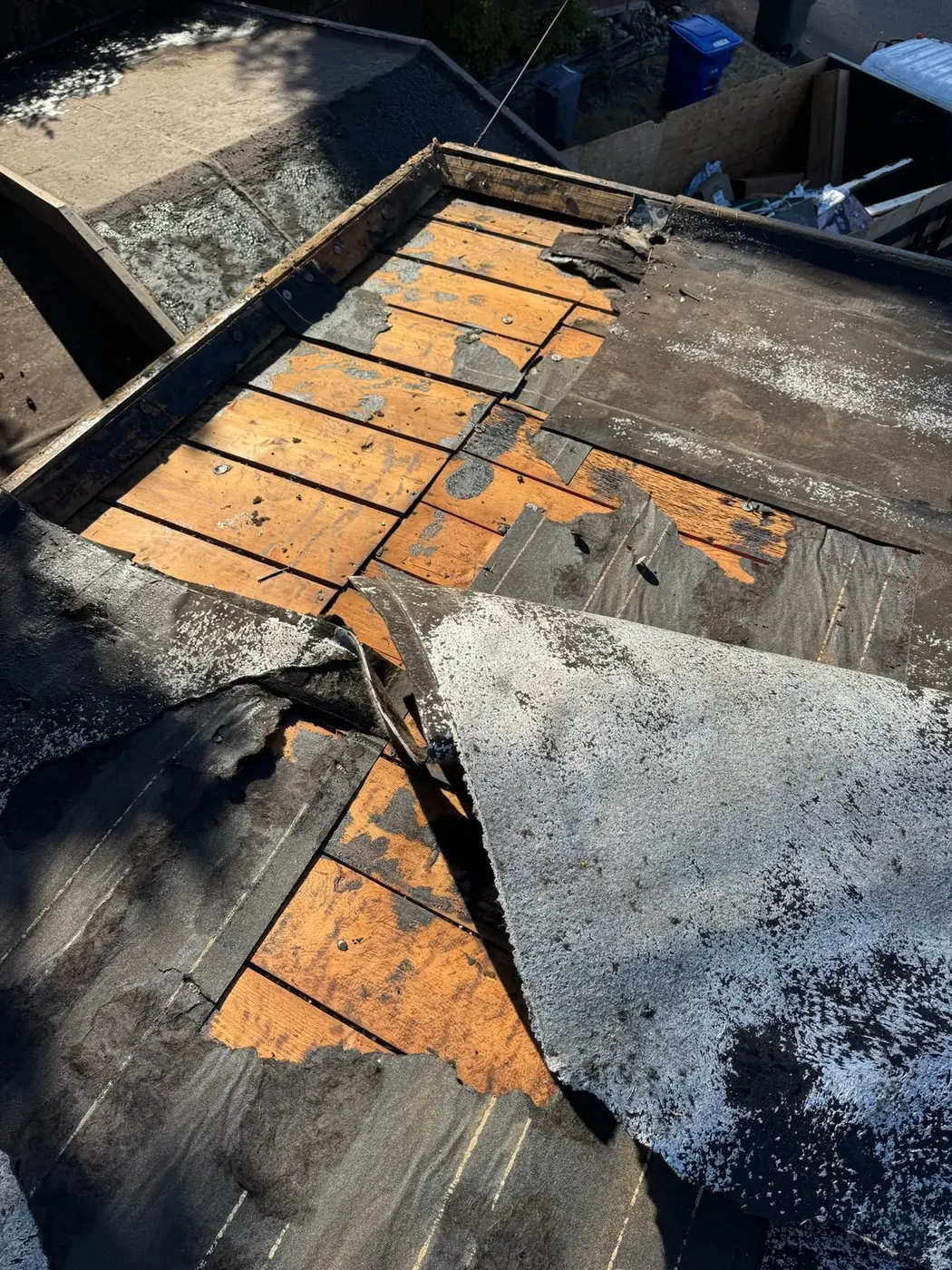
Seattle's flat and low-slope roofs - mid-century homes, additions, garages, apartment buildings - do not wear out evenly. They fail at seams, penetrations, parapets and drains. We connect you with crews who specialize in membrane systems and get those details right.

Where water wins
The four failure points of every flat roof
Seams & laps
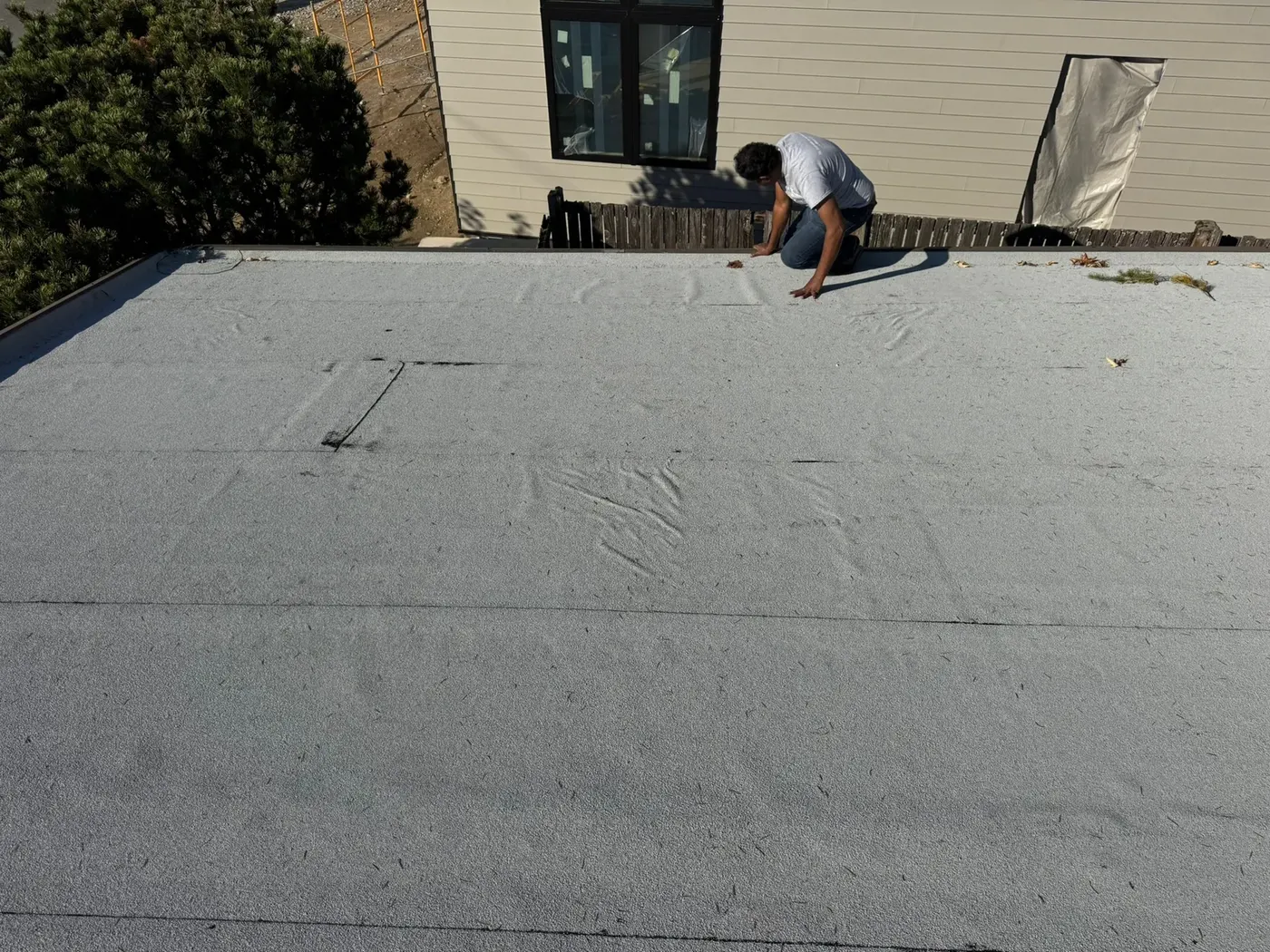
Where sheets meet is where membranes open up - from UV, movement and age. Ponding water finds every weak seam.
Penetrations
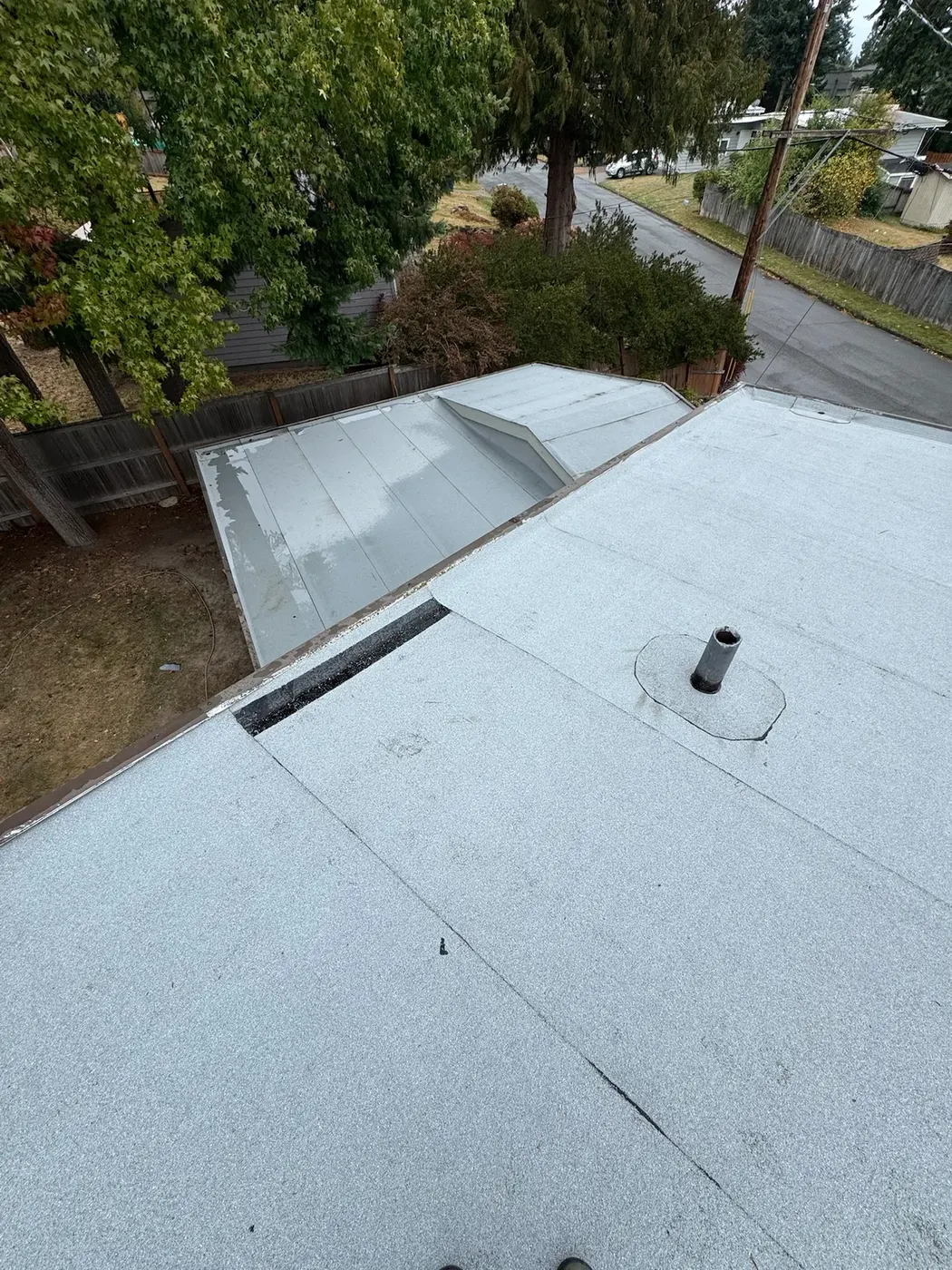
Vents, pipes, HVAC curbs and skylights interrupt the membrane. Each one is a detail that was either done right or will leak.
Parapets & edges
Wall transitions and edge metal take wind and water from two directions. Failed parapet caps soak walls from the inside.
Drains & scuppers
A flat roof is a shallow pool with exits. Blocked or badly flashed drains turn the whole roof into standing water.
One project, start to finish
From failed membrane to a dry building
Systems
Matched to the roof, not to habit
Torch-applied modified bitumen - tough, proven, granulated cap sheets for homes and small commercial roofs; excellent for cut-up roofs with many details.
Single-ply membranes - factory-consistent sheets for larger, cleaner planes; light colors reduce summer heat load.
Coatings & restoration - when the membrane is sound but tired, a restoration coating can buy years at a fraction of replacement cost.
Who this is for
Homes and buildings alike
- Mid-century homes with original low-slope sections
- Additions, garages and carports under 2:12 pitch
- Townhome and condo roof decks
- Apartment, retail and office buildings - see commercial
Ponding water? Blisters? A flat roof past its prime?
Get a flat-roof specialist on the roof - with findings and a written scope, not a guess.